
UNIVERSITY OF MALAGA. IBIMA

Berta Moreno Küstner
Investigadora Principal del Proyecto
Email: bertamk@uma.es
ORCID: orcid.org/0000-0002-9541-215X
Ph.D. in Psychology from the University of Granada and Professor of Psychology at the University of Málaga in the Department of Personality, Assessment, and Psychological Treatment.
Principal Investigator of the “Andalusian Group of Psychosocial Research” and member of the Group “Basic, Clinical, and Epidemiological Research in Mental Health” at the Biomedical Research Institute of Málaga (IBIMA Bionand Platform). She is also part of the Working Group “Psychiatric Epidemiology and Mental Health” of the Spanish Society of Epidemiology.
In the field of research, she has collaborated on more than 40 research projects funded through competitive public calls. The results of the aforementioned projects have resulted in over 115 scientific articles, 14 book chapters, and 134 contributions including presentations and communications at national and international conferences.
The research line she coordinates aims to study schizophrenia from an epidemiological perspective, as well as in relation to stigma, quality of life, and the subjective perception of clinical symptoms. She has also contributed to the validation of assessment scales for needs, stigma, and subjective symptoms in schizophrenia. In recent years, she has focused on suicide prevention both in the clinical setting and in the context of public health.
UNIVERSITY OF CADIZ

Bachelor’s Degree in Psychology from the University of Seville, PhD from the Department of Neuroscience at the University of Cádiz, and Specialist in Clinical Psychology.
She is an Associate Professor in the area of Personality, Evaluation, and Psychological Treatment at the University of Cádiz, with extensive experience in the design, development, and coordination of various funded national and international research projects related to the evaluation of mental health services and disability. In recent years, her scientific activity has focused on the evaluation of Patient-Reported Outcomes in schizophrenia (Instituto de Salud Carlos III), mental health stigma, and clinical evaluation in studies seeking biomarkers in the fields of chronic pain (Fundación Progreso y Salud), addictions (National Plan on Drugs), and bipolar disorder (Fundación Progreso y Salud). Currently, she participates in the national personalized medicine project FARMAPRED-PEP (Applied Pharmacogenetics to Predict Treatment Response in First-Episode Psychosis), funded by the Instituto de Salud Carlos III, and the international study TIMEBASE (IdenTifying dIgital bioMarkers of illnEss activity and treatment response in BipolAr diSordEr). Additionally, she is a member of two national research networks funded by the Health Research Fund (FIS) and currently serves as Co-Principal Investigator (Co-PI) of the Biomedical Research Networking Center in Mental Health—CIBERSAM (CB/07/09/0033).
UNIVERSITY OF CADIZ

Professor and Researcher at the University of Cádiz (UCA), where he teaches at the Faculty of Medicine. This has allowed him to develop stable collaborative relationships with various medical fields, especially those related to Mental Health.
He has participated in more than 20 national and international research projects and is the co-author of approximately 75 articles in journals indexed in the Journal Citation Reports (JCR) in the field of Health Sciences, with more than 20 of these reaching Q1 and an h-index of 21. His main research interests include scale validation, multivariate analysis methods, and structural equation modeling (SEM).
PARC SANITARI SANT JOAN DE DÉU. BARCELONA

She holds a degree in Psychology from the Autonomous University of Barcelona (1996) and a PhD in Psychology from the University of Barcelona (2004). She also has a Master’s degree in Mental Health and Clinical Psychology from the University of Barcelona and a degree in Market Research and Techniques from the Autonomous University of Barcelona (2009).
She has worked at Parc Sanitari Sant Joan de Déu (PSSJD) since 1997 and, since 2008, she is the Coordinator of the PSSJD Research Unit. She is the co-coordinator of the Etiopathogenesis and Treatment of Severe Mental Disorders group, MERIT, together with Dr. Judith Usall, recognized as a consolidated group by AGAUR, and co-PI of the G11 group at CIBERSAM.
The research line she leads focuses on the study of schizophrenia and other psychotic disorders, from the early stages (first psychotic episodes) to more chronic stages of the illness. In recent years, her work has centered on the design and evaluation of effective psychological interventions for people with psychosis, specially Metacognitive Training and VR-AVATAR. The research line is also interested in studying the social stigma of mental illness, family impact, and the validation of assessment scales, as well as evaluating the effectiveness of psychological interventions for people with psychosis, considering gender as a cross-cutting aspect in her research. She has lead more than 30 projects and has more than 250 publications.
PARC SANITARI SANT JOAN DE DÉU. BARCELONA

Dr. Regina Vila-Badia is a psychologist and neuropsychologist, currently working as a postdoctoral researcher at Fundació Sant Joan de Déu, within the consolidated research group Etiopathogenesis and Treatment of Severe Mental Disorders (MERITT). Her research focuses on mental health, with a particular emphasis on suicidal behavior, the impact of traumatic experiences across the lifespan, and risk and protective factors involved in the onset and course of severe mental disorders, especially psychosis.
She completed her PhD through a PFIS predoctoral fellowship, focusing on the impact of childhood trauma on suicidal behavior in individuals with first-episode psychosis, gaining strong training in clinical, epidemiological, and longitudinal research. As a postdoctoral researcher, she has led and participated in more than 24 competitive national and international research projects, mainly in the fields of suicide and psychosis, including projects as principal investigator and co-principal investigator.
She combines her research activity with university teaching, supervision of residents, and co-supervision of PhD theses. She is actively involved in knowledge transfer and scientific dissemination, including her collaboration as an expert contributor to the mental health dissemination platform SOM360. She is also a member of the Suicide Research Promoting Group of the Catalan Department of Health.
INSTITUT D’INVESTIGACIONS BIOMÈDIQUES DE GIRONA DR. JOSEP TRUETA (IDIBGI)
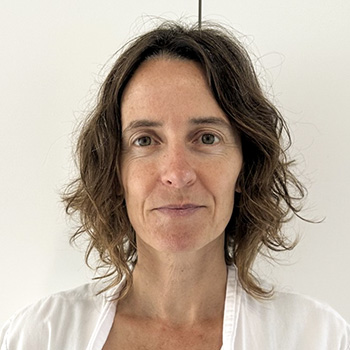
Specialist in Clinical Psychology accredited by the Spanish Ministry of Health and PhD in Health Sciences from Radboud University Nijmegen, I combine clinical practice, research, and patient safety activities at Institut d’Assistència Sanitària (IAS) and Institut d’Investigació Biomèdica de Girona Dr. Josep Trueta (IDIBGI), where I currently lead the Mental Health and Addictions Research Group.
My work centers on translational research in mental health and addictions, integrating pharmacological and non-pharmacological interventions—including psychotherapeutic, body-based, creative, and psychosocial approaches—to improve diagnosis, treatment effectiveness, functional recovery, and patient safety. I combine biomarkers, psychofunctional profiles, and life-context variables to advance personalized care, while incorporating digital technologies such as artificial intelligence, virtual and augmented reality, and gamification. A gender-sensitive perspective and shared decision-making with service users are embedded as cross-cutting principles in all projects.
I have contributed to national and European research projects either as collaborator or principal investigator, generating high-impact peer-reviewed publications and clinical practice guidelines. I actively participate in outreach initiatives to disseminate research findings and engage service users as active collaborators.
Throughout my career, I have worked in national and international organizations—including Scottish Intercollegiate Guidelines Network (SIGN), Cochrane, Avedis Donabedian Foundation, and the World Health Organization (WHO)—as well as with the Spanish and Catalan Ministries of Health, contributing to both research and clinical governance initiatives. In addition, I am responsible for research capacity building within my institution, training early-career mental health professionals, supervising PhD candidates, and mentoring senior clinical and non-clinical staff.
INSTITUT D’INVESTIGACIONS BIOMÈDIQUES DE GIRONA DR. JOSEP TRUETA (IDIBGI)

Clinical Psychologist and Coordinator of Mental Health and Addictions Programs at the Institut d’Assistència Sanitaria. He was an Expert Advisor to the Mental Health and Addictions Master Plan of the Department of Health of Catalonia since 2013-2024. He was Operational Director for the transformation of Mental Health & Addiction from Health Department & CatSalut. Generalitat of Catalonia.
He is an expert in implementing, coordinating and evaluating mental health programs and services. He is also the leader and co-IP of the Mental Health and Addictions Research Group of the Institut d’Investigacions Biomèdiques de Girona Dr. Josep Trueta (IdibGI). Among the research areas, two areas stand out: strategic planning and the clinical area.
Strategic planning of mental health care, with two types of study. The first to identify and map mental health services: Atlas of Mental Health and Addictions (Department of Health, 2018). The second, studies to identify treatment needs in serious mental disorders, learning problems, elderly people and drug addictions living in social and assistance services (Generalitat de Catalunya, GG-ICASS 03-2007-2008), to improve social care resources specialized in mental health (Departament de Treball, Afers Socials i Famílies de la Generalitat de Catalunya, 2017), or in the impact of the financing systems on the quality of mental health care (REFINEMENT, program 7FP: 261459).
Clinical research has been developed mainly in the area of early care for psychosis, personality disorders, depression, suicidal behavior and attention deficit hyperactivity disorder. It belongs to the Spanish Metacognition Study Group, which has received different Spanish FIS grants (PI18/00212; PI14/00044), is a member of PSICOST.
UNIVERSIDAD DE CANBERRA (AUSTRALIA)

Luis Salvador-Carulla is the professor of mental health and the Deputy Director of the Health Research Institute, University of Canberra. His main field of interest is decision support tools for the analysis of complex health systems and policy in public health with a special focus on mental health, ageing, disability and intellectual developmental disorders. He has been advisor to the Government of Catalonia and the Government of Andalucia (Spain), the Spanish Ministry of Health, the European Commission (EC) and the World Health Organisation (WHO). He coordinated the European Commission (EC) project eDESDE-LTC for the development of an European classification of services for long term and he participated as national coordinator in the EC project Refinement to develop a toolkit for the assessment of financing of mental health systems, and PECUNIA for producing standards units in costs analysis in Europe. He has coordinated the Integrated Atlas of Mental Health Project for mapping mental health services in over 30 health areas around the World. He received the Leon Eisenberg Award of the Harvard Medical School in 2012; the Tom Trauer Award Evaluation and Research Award for his contribution to mental health service research in Australia in 2022, the Research Impact Award of the Faculty of Health and the Research Excellence Award of the University of Canberra in 2023, and the Malaspina Award also in 2023.

Eleni Petkari
Eleni Petkari holds a PhD in Psychology from the University of Granada. She is an Associate Professor at the University of Málaga and a member of the research group Grupo Andaluz de Investigación Psicosocial – GAP (CTS 945). She has held teaching and research positions in five countries and seven different universities (University of Málaga, University of Granada, and UNIR in Spain; Middlesex University Dubai in the UAE; European University Cyprus in Cyprus; Queen Mary University of London and Roehampton University of London in the United Kingdom), as well as leadership roles in programme management and team coordination.
Her main line of research focuses on patient reported outcomes in psychotic disorders. She has collaborated on various national and international research projects. Her scientific career is reflected in the publication of 35 articles, in most of which she is the first or corresponding author. She has participated in more than 30 international conferences and has been a member of the scientific committee of an international conference since 2014 (International Psychological Applications Conference and Trends – INPACT).
She is an Associate Editor of Quality of Life Research, and serves on the editorial boards of BMC Psychology and PLOS One.